
UK’s New HFSS Rules: Don’t Panic, We’re Here to Help
Discover how the UK’s new HFSS regulations are reshaping product reformulation and testing. Insight and R&D teams face growing pressure to innovate faster, balancing healthier recipes with consumer appeal. Learn practical tips to navigate these changes with confidence.


With the UK Government set to introduce tougher rules around HFSS products, those working in Marketing, Insight and R&D are right in the thick of it.
These regulations aren’t just about ticking boxes; they’re pushing brands to rethink their products from the ground up. Reformulating products or launching new, healthier versions is no small feat.
Hold Up. HFSS Who?
HFSS means foods high in fat, sugar, or salt. The UK Government wants to make it harder to promote and sell these products, especially to kids.
Whether a product is HFSS depends on a scoring system that looks at how much fat, sugar, salt, and healthy stuff is in it. It’s called the Nutrient Profiling Model.
As it currently stands:
- HFSS products can’t be shown near checkouts, entrances, or in special displays in large stores.
- As of January 2026, adverts for HFSS products are banned online and can’t appear on TV before 9pm.
- Soon, brands and retailers might be banned from offering “buy one, get one free” or “multi-buy” deals on HFSS products.
What Is Being Proposed?
This week, the UK Government proposed an update to the Nutrient Profiling Model that would make the scoring system tougher - meaning more products could soon be classed as HFSS, including some yoghurts, drinks, and snacks that were previously outside the regulations.
These rules mean brands must rethink how they make, price, and advertise their products. With prime shelf and advertising space taken away, manufacturers are left with few options but to reformulate to healthier versions.

The Challenge with Reformulation
Changing recipes is hard! How do you cut down on sugar, salt, and fat (the things that make it taste good, let’s be honest!) without losing the magic that makes your product the one consumers reach for? Beyond flavor - taste, texture, and mouthfeel can all be impacted by recipe changes. And if consumers don’t love the new version, it’s game over.
The pressure’s on to move fast, too. The old-school product development cycle is too slow and clunky for this moment.
What's on Your Plate?
- Speed without sacrificing quality: You’ll need to test and tweak fast - but still get real, honest consumer feedback that you can trust.
- Understanding how people experience your product: It’s not just about ingredients on a label. How does it taste? Feel? Does it hit the right emotional notes for your customers?
- Making sense of all that data: Insights only matter if they’re clear and usable. You’ll want data that helps your team make smart calls without drowning in spreadsheets.
- Getting the logistics right: Managing your agency, shipping samples and reviewing reports shouldn’t steal hours from your day.
I know what you’re thinking. All that sounds ideal, but finding an agency partner you can trust to deliver? Impossible.

The key is working smarter, not harder. Break down product development into smaller, faster cycles. Test early, test often. Mix up your methods: in-home usage to see real consumer behavior, plus controlled tests to nail down sensory details.
Use sensory science smartly - find the product features that truly make people love your brand and focus your reformulations there. Share your data widely within your team so everyone’s on the same page, speeding up decisions.
Quick Wins for Agile Product Reformulation Testing
Here are a few practical tips to help you get started with more agile, consumer-driven product testing and reformulation:
- Prototype Screening Early: Start with small batches or even concept-level testing to quickly rule out formulations that won’t cut it. This saves time and money before investing in full-scale product runs.
- Mix Testing Approaches: Use a combination of Central Location Tests (CLTs) for controlled sensory evaluation and In-Home Usage Tests (IHUTs) to understand real-life consumer behaviour over time.
- Leverage AI and Sensory Insights: Tools that analyze sensory drivers can help pinpoint exactly what needs tweaking - whether it’s sweetness, saltiness, or texture - so your reformulation hits the right notes faster.
- Iterate in Rapid Cycles: Don’t wait for a perfect recipe on the first try. Use consumer feedback loops to refine formulations continuously, cutting down on lengthy trial-and-error phases.
- Benchmark Against Competitors: Testing your reformulated product against competitor offerings helps ensure you maintain or gain shelf advantage, not just meet regulations.
You’re Not Alone
It’s happened before, so don’t panic.
Danone’s Yoghurts – Reduced Sugar Across the Category
The OG: Before the UK Government and Public Health England’s sugar reduction programme, many branded yoghurts had high levels of added sugars - often above 10g per 100g.
The Fresh Take: In response to the voluntary sugar reduction programme targeting major contributors to dietary sugar (including yoghurts), Danone reformulated its yoghurt portfolio, achieving a 16% reduction in total sugar content across its products - ahead of the category’s average.
This was a portfolio-level reformulation that improved the nutrient profile of mainstream yoghurts, bringing them closer to healthier thresholds and providing a model for how R&D teams can balance sugar reduction with consumer acceptance.
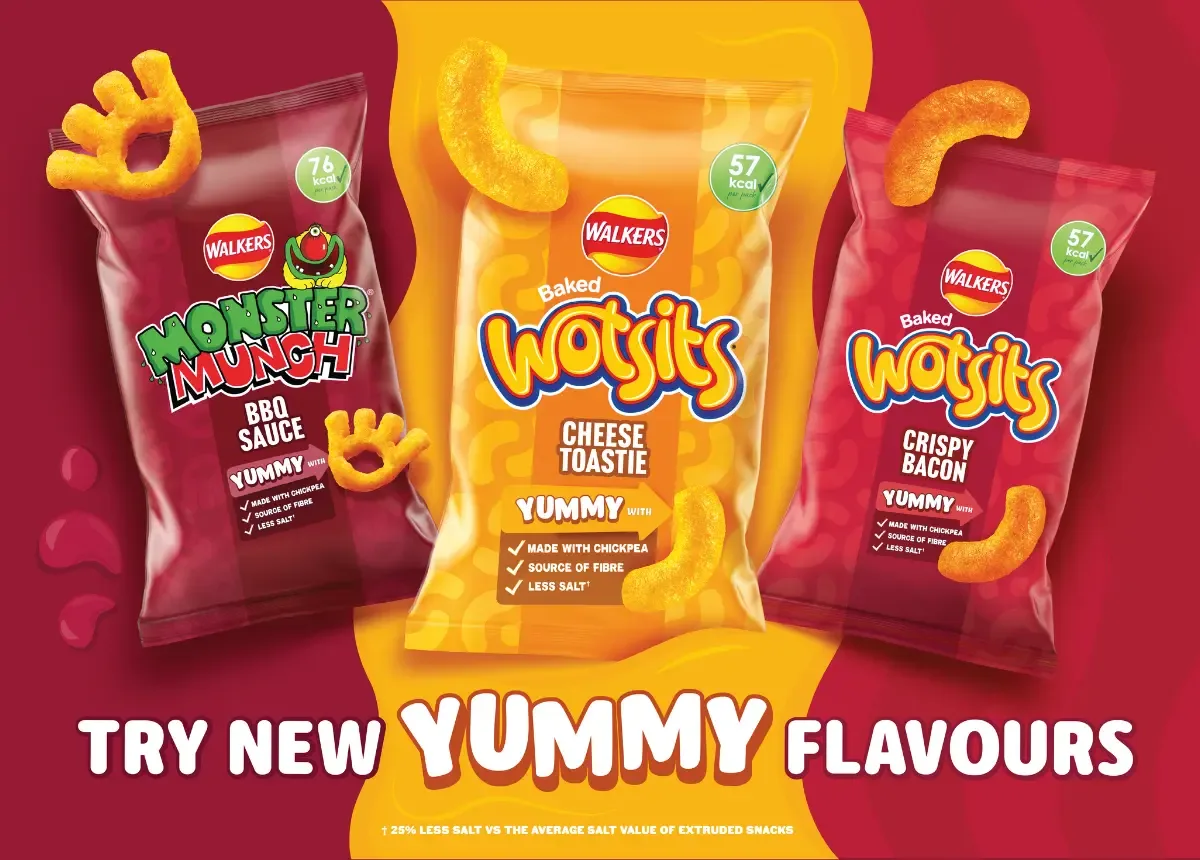
Walkers ‘Yummy With’ Snack Range
The OG: Walkers heritage savory snacks Wotsits and Monster Munch have been lunchbox staples for years but are classified as HFSS under UK rules.
The Fresh Take: Walkers took this opportunity to extend their current portfolio, launching a new ‘Yummy With’ range including Wotsits Cheese Toastie and Wotsits Crispy Bacon, as well as Monster Munch BBQ Sauce. These were formulated with chickpea as a base, contain ~25% less salt than average extruded snacks, and are designed to be under 100 calories per pack so they can be classified as non-HFSS.
Why it matters: Although these examples predate the most recent HFSS marketing and promotions restrictions, they were driven by the same nutritional incentives that now underpin HFSS regulation - namely, lowering fat, sugar, and salt content to improve health outcomes and meet nutrient profiling targets.
Bottom Line
These HFSS rules are a wake-up call and a chance to rethink how we innovate. The brands that nail it will be the ones who move quickly, listen closely to consumers, and iterate with confidence.
For insight and R&D teams, this means evolving how you work - embracing speed, agility, and real consumer connection as your north stars. It’s not just about compliance; it’s about creating products that people want and that stand the test of time in a rapidly changing environment.
Oh, and all those things that would be ideal to have but impossible to find from a product testing partner?
- Speed without sacrificing quality
- Understanding how people experience your product
- Making sense of all that data
- Getting the logistics right
Let's talk. Get in touch here.
Product Hub: The Muffin Man of Product Testing, if you will.
Blog.
The latest insights from our product experts